What’s New in Avontus Designer: custom planking, toeboard text, and improved rendering
The latest release of Avontus Designer® introduces workflow improvements that reduce repeated setup and manual adjustments and give you more… Read More

Adoption of system scaffolding is growing – and so is awareness of what it takes to get the most from this equipment. A recent ScaffMag feature addressed long-held assumptions around flexibility, cost, and inspections. Those myths still circulate. They still slow decisions. And they are worth examining clearly.
For many contractors, the conversation has shifted from whether system scaffold improves outcomes to how to manage the equipment.
One of the most persistent objections to system scaffolding has been flexibility. Tube and fitting, the argument goes, can be adjusted to the millimeter and fitted around any configuration, whereas system scaffolding is more limited.
ScaffMag challenges that assumption directly. Modern system scaffolding couplers support adaptation beyond standard 250 mm or 500 mm increments. Ledger-to-ledger connections work on horizontal ledgers, with or without a spigot. Complex builds once treated as tube and fitting territory are well within what system scaffolding can deliver.
Where tube and fitting still earns its place is in tight or irregular areas — and many contractors combine scaffolding types, using system scaffolding for main frameworks and tube and fitting for sections that demand it. For a deeper look at where each approach performs best, see our guide: Why Leading Contractors Prefer System Scaffolding Over Tube and Fitting
What system scaffolding offers that tube and fitting cannot match is consistency. System scaffolding’s fixed connection nodes mean crews do not need to measure or align each lift individually. Every component above the base is levelled the moment it is positioned. That consistency makes faster, safer builds repeatable.
Speed is one of the primary reasons contractors move to system scaffolding. Standardized components and modular connections let crews erect and dismantle structures efficiently and consistently without sacrificing safety. The ScaffMag time comparison is striking: a system scaffolding tower erected and dismantled in 43 minutes, against 1 hour 51 minutes for a tube and fitting equivalent — with material weight approximately halved.

The assumption that inspections take just as long with system scaffolding as with tube and fitting does not hold up under scrutiny.
Fewer loose components mean fewer items that can fall during assembly and fewer elements to check individually. Built-in gravity locks on steel decks provide immediate visual confirmation that a deck is secure the moment it is positioned. Wedge and pin indicators on ledgers and stair treads serve the same purpose — a raised wedge or pin is a clear, visible signal that a component has not been secured correctly.
ScaffMag highlights another common tube and fitting issue: overlapping boards used to accommodate complex angles can introduce trip hazards on the walking surface. Solutions such as engineered corner panels and three-legged arrangements in system scaffolding eliminate that problem, producing a flush, non-trip surface that is safer and quicker to inspect.
Inspections become faster and more reliable when the system is designed to make problems visible at a glance.
The upfront equipment cost of system scaffolding is an important consideration. System scaffolding is a precision-manufactured product, and the initial investment is higher than tube and fitting.
Focusing only on equipment price, though, overlooks where the real money is spent.
Traditional tube-and-fitting requires each tube to be individually measured, levelled, and bolted into position. This repetitive process consumes significant labor hours. Factor in system scaffolding’s average component lifespan of 20 to 30 years and the reduced labor requirement, and a switch makes financial sense.
The referenced ScaffMag article also notes that because system scaffolding is modular, no cutting is required as might be necessary with tube and fitting. Any size requirement is met by selecting the right component — eliminating the material waste and devaluation that comes from cutting tubes to fit a specific project.
Moving to system scaffolding is not just an equipment decision. Component-level tracking, yard workflows, material planning, and project records all need to change, too. For businesses that have not made those adjustments, the equipment may be performing well but the operations around it likely are not.
The challenge many contractors encounter after switching is that their information systems have not kept pace with their field speed. When a design changes mid-project, those revisions need to reach the yard before materials are pulled. Otherwise, material shortages stay invisible until loading has already started. Scope changes that only get communicated on site never find their way into the project record.
As projects grow in size and complexity, those gaps compound. Decisions get made on yesterday’s data. The productivity gains system scaffolding delivers in the field can get absorbed by the administrative friction that surrounds it.
Projects rarely unfold exactly as planned:
Unrecorded change is where businesses lose control. When a project change happens on site and never makes it into the system, the cost doesn’t disappear — it accumulates.
When a scaffold changes in the field, that change needs to flow back into the project record to allow for updated material requirements, revised billing, and a re-forecast before the project overruns.
Without a reliable process, small changes compound:
For a closer look at what inventory inaccuracy costs in real terms, read: The Hidden Cost of Drift: Why Inventory Accuracy Is a Financial Necessity
System scaffolding brings a specific inventory management challenge that tube and fitting does not. Because the components are engineered, modular, and higher in value, they are worth tracking at the part level. The business case for doing so is obvious, but processes must be in place to achieve this.
System scaffolding components are distinct in form, which makes them more trackable than a yard full of tubes and clamps. That is an advantage, if you use it. When you can see exactly the equipment you have, where it is located, and when it is due to be returned to the yard, the whole business runs on better information.
When that information is missing, the business compensates with excess stock, re-rented equipment, and capital spend that could have been avoided. Estimators commit to projects without knowing if materials are available. Yard workers pull from inaccurate pick lists. Leadership makes purchasing decisions based on estimates, not actuals.

As scaffold businesses grow, inventory management becomes more than a yard function. Handled well, it directly affects profitability, customer service, and the ability to win and deliver more work. See how our inventory management and rental billing app Quantify® supports streamlined scaffold operations end-to-end.
Of course, just switching to system scaffolding does not automatically create operational efficiency. The equipment enables better builds. Reaching that potential requires better processes.
Scaffold operations typically run through multiple, unconnected workflows. Design teams produce drawings. Yard teams count and pick materials. Field crews assemble and disassemble scaffolds. Project managers oversee schedules and budgets.
Each team performs an essential role. The problem is the disconnect between the teams.
When information fragments across departments, teams spend more time reconciling records than executing work. Responding to project changes becomes harder when each group is operating from a different version of the same information. The tools available to bridge that gap have also changed significantly. For background on how design itself has evolved, see The Evolution of Scaffold Design.
Modern scaffold operations are increasingly built around connected workflows — where estimating, material planning, and field execution connect as a single flow rather than a series of handoffs.

When your estimators, yard managers, and field crews share the same information in real time, your teams gain the confidence to respond to change without losing control.
Taking Full Advantage of System Scaffold
The equipment decision is the easy part. What determines whether a system scaffolding investment delivers its full return is what surrounds it — the processes, the software, and the discipline to keep estimating, operations, and deliveries connected.
The contractors seeing the strongest results are not simply using better equipment. They are running better businesses with accurate project records, real-time inventory visibility, and billing that reflects what was actually built.
System scaffolding gives your crews the tools to build faster and safer. The right operational infrastructure gives your business the visibility to grow without losing control.
Learn more about Quantify
Want to see Avontus Quantify in action? Book a demo with our team today.
About Quantify: Quantify is an inventory management and rental billing platform built specifically for scaffold operations. It connects estimating, design, inventory, and billing in a single source of truth, helping contractors get maximum value from system scaffold investments.
The short answer used to be no, but that’s changed. Modern system scaffold couplers now support adaptation way beyond the old 250mm or 500mm increments. Ledger-to-ledger connections work on horizontal ledgers with or without spigots. Stepped facades, curved buildings, complex geometries—they’re all within reach now.
That said, tube and fitting still has a place. For tight or irregular areas, tube and fitting delivers flexibility that system scaffold can’t match. The best contractors aren’t choosing one or the other—they’re combining both. System scaffold handles the main framework, and tube and fitting tackle the tricky sections that demand it.
Here’s what system scaffold does offer that tube and fitting genuinely cannot: consistency. Fixed connection nodes mean your crews don’t measure or align every single lift. Everything above the base is leveled the moment it’s positioned. That consistency makes faster, safer builds repeatable every single time.
The numbers tell the story. System scaffold can be erected and dismantled in 43 minutes compared to 1 hour 51 minutes for an equivalent tube and fitting setup—and you’re moving roughly half the material weight.
Standardized components and modular connections let your crews work efficiently without sacrificing safety. It’s not just about erecting scaffolds faster though. The real advantage is repeatability. Your teams develop rhythm and confidence because they’re not troubleshooting configurations on every single lift.
The catch? Your information systems need to keep up. When your field crews are moving fast but your design, material planning, and inventory systems are running on spreadsheets and PDFs, you’re leaving gains on the table. Design changes won’t reach the yard in time. Material shortages stay invisible until loading starts. That’s where the productivity advantage gets eaten up by administrative friction.
Yes, and it’s not even close. Fewer loose components mean fewer items that can shift during assembly and fewer individual elements to check. Built-in gravity locks on steel decks give you immediate visual confirmation—you can see at a glance whether a deck is secure. Wedge and pin indicators on ledgers and stair treads work the same way. A raised wedge or pin is unmistakable—it tells you immediately whether a component isn’t secured correctly.
Then there’s the trip hazard problem with tube and fitting. Overlapping boards used to accommodate complex angles create walking surface hazards. System scaffold’s engineered corner panels and three-legged arrangements eliminate that problem, producing flush, non-trip surfaces that are both safer and faster to inspect.
When your system is designed so that problems are visible at a glance, inspections become faster and more reliable. It’s one of the overlooked advantages that adds up quickly over multiple projects.
The initial investment is higher—system scaffold is precision-manufactured, and that costs more than tube and fitting. But focusing only on equipment price misses where the money actually gets spent.
With tube and fitting, workers measure, level, and bolt every single tube into place. That’s repetitive labor multiplied across dozens of lifts. System scaffold? Your crews level the base, and every lift above is automatically leveled. Factor in the component lifespan of 20 to 30 years, the reduced labor requirement, and the simplified inspection process, and the economics shift dramatically.
System scaffold is also modular, so no cutting required—unlike tube and fitting where you might cut tubes to fit a specific project. That eliminates material waste and the value loss that comes with custom-cut tube. Any size requirement is met by selecting the right component.
When you do the full lifecycle math, not just first-cost comparison, system scaffold delivers a stronger return.
Changes are inevitable. Access requirements shift. Scopes expand. Site conditions differ from drawings. Client needs evolve mid-build. That’s normal.
The real problem isn’t change itself—it’s what happens to that change afterward. When your scaffold changes in the field, does that information get back into your project record? Are your material requirements updated in inventory? Does billing reflect the revised scope? Do you have re-forecasts before costs spiral?
Without a reliable process, small changes compound into big problems. Materials become harder to track. Re-rent costs climb unexpectedly. Utilization data becomes wrong. Invoices become difficult to reconcile. For contractors managing multiple projects simultaneously, keeping design intent aligned with field reality is absolutely critical.
This is where systems like Quantify make a difference. When field changes feed automatically back into your inventory and billing systems, you maintain control without losing speed.
Because system scaffold components are engineered, modular, and higher in individual value—they’re worth tracking at an item level. The business case is strong, but only if you have the right processes in place.
Here’s the advantage: system scaffold components are fewer in type and distinct in form, making them genuinely trackable. You can see exactly what you have, where it is, and when it returns. That’s an advantage—if you use it. When you have that visibility, the entire business runs on better information.
When you don’t have it? You compensate with excess stock, hired-in equipment, and capital spending that could have been avoided. Estimators commit to projects without knowing materials are available. Yard managers pull from inaccurate pick lists. Leadership makes purchasing decisions based on guesses, not actual data.
As your scaffold business grows, inventory management becomes more than a yard function. Done well, it directly affects profitability, customer service, and your ability to win and deliver more work.
System scaffold doesn’t automatically create operational efficiency—the equipment enables it, but processes deliver it. Most scaffold operations run through multiple, unconnected workflows. Design teams produce drawings. Yard teams count and pick materials. Field crews assemble and dismantle. Project managers oversee schedules and budgets.
Each team performs an essential role. The problem is what happens between teams. When information fragments across departments, teams spend more time reconciling records than executing work. Responding to change becomes harder when each group operates from a different version of the same information.
The contractors seeing the strongest results aren’t just using better equipment. They’re running better businesses: accurate project records, real-time inventory visibility, and billing that reflects what was actually built.
Modern scaffold operations are increasingly built around connected workflows—where design informs material planning, inventory management, and field execution as a single flow rather than a series of handoffs. When design, yard, and field teams share the same information in real time, your teams gain confidence to respond to change without losing control.
Quantify is built specifically for the operational challenges that come with system scaffold. It connects design, inventory, and billing in a single platform so information flows naturally between teams instead of fragmenting across spreadsheets.
When you’re tracking modular, higher-value components, Quantify gives you item-level visibility into what you own, where it’s deployed, and when it returns. You can instantly identify unnecessary re-rent costs. Material planning feeds directly from project design. Field changes automatically update inventory and billing records.
The result? Your teams have confidence that design intent aligns with field reality. Estimators know what materials are actually available. Yard managers pull from accurate pick lists. Billing reflects what was built, not what was estimated.
For scaffold businesses transitioning to system scaffold, operational infrastructure like Quantify often determines whether you capture the full value of the equipment investment.
That’s actually a question worth asking honestly. System scaffold is excellent equipment, but it only delivers its full return if you have the operational infrastructure to support it.
If your estimating, design, yard, and project management functions still run on disconnected spreadsheets and manual processes, system scaffold will perform well in the field—but your operations won’t. You’ll be moving fast equipment with slow information systems.
The equipment decision is the easy part. What determines whether a system scaffold investment delivers its full return is what surrounds it: the processes, the software, and the discipline to keep design, inventory, and field execution connected.
Some contractors successfully implement system scaffold and operational infrastructure simultaneously. Others transition equipment first, then upgrade processes. Either way, make the operational infrastructure a priority. That’s where the real value lives.
The latest release of Avontus Designer® introduces workflow improvements that reduce repeated setup and manual adjustments and give you more… Read More
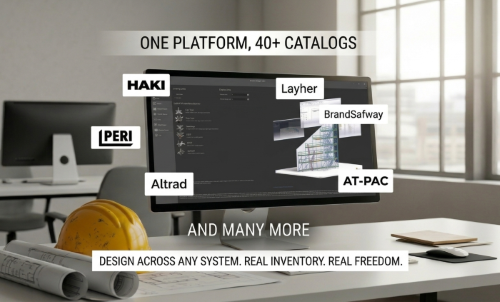
There’s a quiet trend happening in scaffold design software, and if you’re a scaffold contractor, it’s worth paying attention to.… Read More

The NASC Skills Gap Report 2026 has put a number on something every scaffold business owner in the UK already… Read More