
The Best Practices of Successful Scaffolding Businesses
What separates thriving scaffolding companies from the rest? In a competitive and increasingly digitized construction environment, success is defined by… Read More
Do you have excess inventory gathering rust in your scaffold yard? If so, you may be missing out on one of the easiest ways to increase utilization and boost cash flow.
Industry analysts estimate the global construction scaffolding rental market at around USD 5–7 billion today, with annual growth of about 6–8% over the coming years. Renting out scaffolding and equipment allows you to tap into this rising demand, expand your business, and diversify your revenue streams.
But despite the market’s strong growth, many scaffolding vendors struggle to capitalize on re-rental opportunities. Without the right inventory management systems, the juggling of equipment, shipping, invoicing, and returns quickly becomes unmanageable.
This guide breaks down the key challenges of scaffold re-rentals and the most effective ways to maximize ROI.
First and foremost, poor inventory management is the biggest obstacle to running a profitable rental business. Without the right forecasting, management, and invoicing systems in place, you can expose your company to unnecessary financial and operational risks, as described below.
Learn how you can stop your bottom line from bottoming out and get back on track with Avontus.

Most scaffolding firms still rely on traditional methods (spreadsheets and paper-based shipping documents) for asset management and rental inventory tracking. These approaches are error-prone and create costly inefficiencies across every stage of the rental cycle.
Shipping documents are often duplicated or triplicated to track scaffolding rentals from the yard to the job site and back. However, they are not always checked, signed, or stored consistently. In some cases, the shipping list is lost or incomplete, which makes it difficult to verify what actually left or returned to the yard.
Without reliable documentation, teams cannot identify over-shipments, shortages, or missing components during transport. When shipments are not verified against the original list, items may be counted incorrectly, which causes discrepancies that carry over into invoicing and inventory forecasting.
Another common issue is the lack of a formal count sheet or inspection procedure for rental inventory. This limits visibility into stock levels. While some generic software can track serialized items, bulk scaffold components are often left unaccounted for over time. Without regular inventory counts, businesses can lose significant revenue due to unreturned, misplaced, or stolen equipment.
This situation is more common than most scaffolding companies realize.
Inaccurate order tracking also creates major challenges for accounting teams. They rely on the physical count of stock to identify discrepancies between inventory records and the actual stock on hand. When missing or damaged components are not captured promptly, they are never billed, and the lost revenue adds up quickly.
Mistakes in invoicing can cost your company tens or even hundreds of thousands of dollars each month. You can’t charge customers for repair or replacement costs if these problems get discovered too late. At the same time, unexpected drops in inventory due to equipment failure or loss can lead to unplanned downtime that disrupts rental activity.
Running a rental business without accurate data puts both revenue and operational efficiency at risk.
Do not let outdated paper-based processes or spreadsheet systems drain your profits.
We built Avontus Quantify to help you automate your rental management, so you can focus on closing deals and improving inventory turnover.
“Quantify took us from tracking being almost an impossibility to being able to do it with a couple of clicks.”
– Jack Dalrymple, Commonwealth’s director of branding and operations
Learn how a modern scaffolding inventory management system can transform the way you track, manage, and grow your rental operations.
Avontus Quantify offers an all-in-one platform that can streamline your workflow and boost re-rental profitability for both internal and external use. Keep reading to learn how Quantify addresses the most common challenges in scaffolding inventory management and billing.
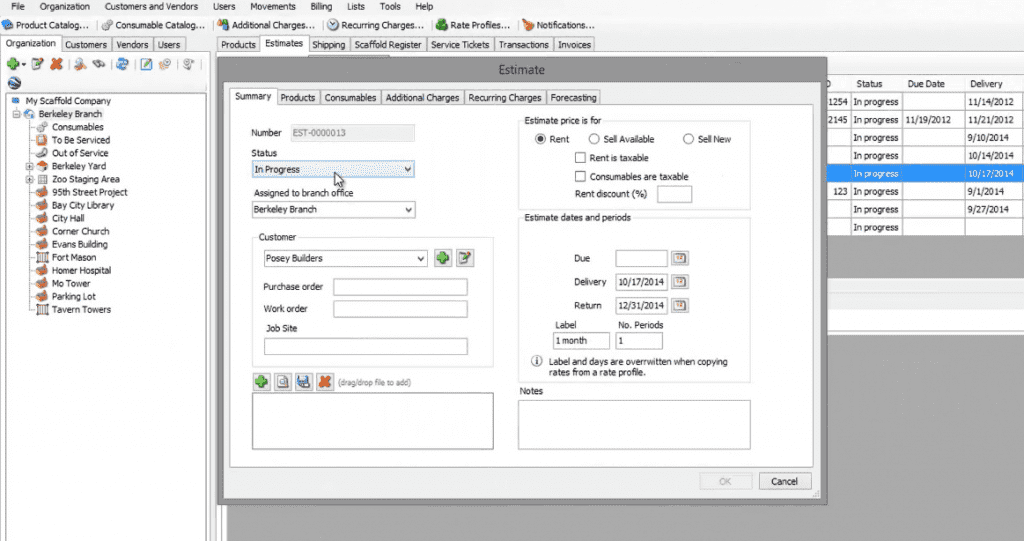
Quantify makes it simple to build accurate rental estimates based on the material currently available at the job site or in your yard. You can import product quantities into an estimate or create a new rental estimate from scratch:
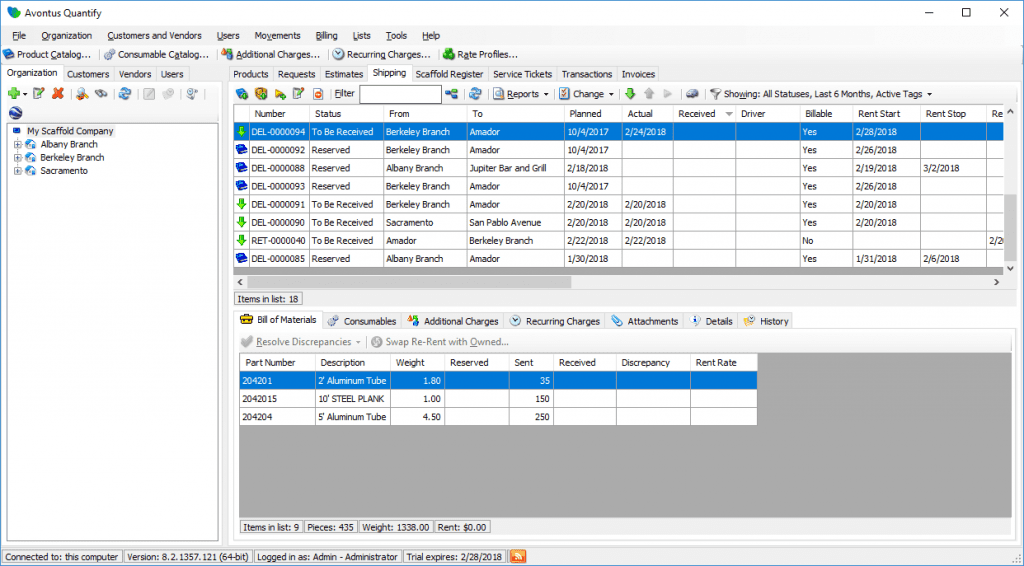
Then, issue the delivery order from your estimate:
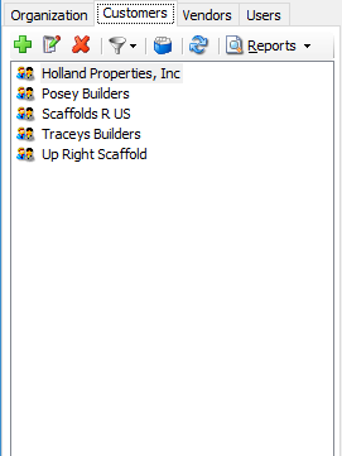
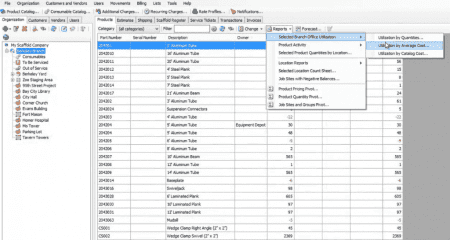
The best part is the ability to manage your entire rental stock in one place, which ensures accurate stock levels and real-time visibility for all customers:
As mentioned above, Quantify lets you generate invoices for all charges, including rental fees and sales of consumable items. You can also integrate Quantify with major accounting platforms such as QuickBooks, Oracle, and Xero.
With comprehensive inventory tracking, Quantify immediately flags missing items when they are not returned from the job site.
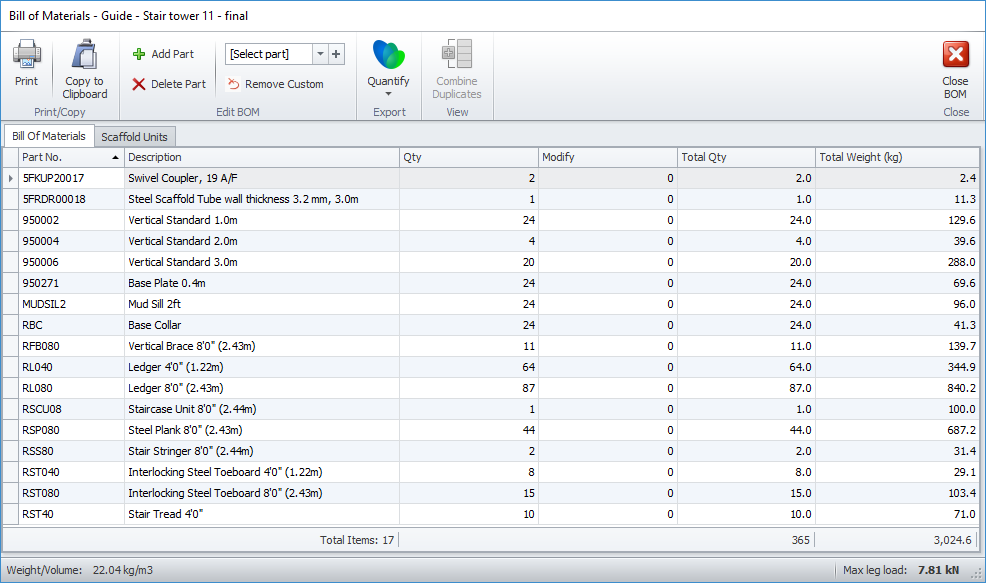
Avontus Quantify integrates seamlessly with Avontus Designer®. This means you can generate a detailed material list for your project in Avontus Designer and export it to Quantify to cross-check inventory and accurately calculate scaffolding project costs.
Need to make changes to your plan on the fly? You can edit the bill of materials (BOM) in Quantify, such as by adding parts and quantities, and then create instant estimates for your end-users.
In addition to monitoring rented items and pricing during shipment and return, Quantify enables you to manage ongoing hire billing at the item level, which gives you full transparency into what is generating revenue.
These are just a few of the ways Quantify helps you unlock greater profit and operational efficiency through re-rentals. Explore additional ways below.
Beyond the inventory management capabilities found in generic software, Avontus Quantify is built for the specific needs of scaffolding companies. The app incorporates every detail required to run a profitable rental operation, from utilization forecasting to accurate billing.
Specialized software like Avontus Quantify allows you to manage re-rent or cross-hire in line with your owned equipment. This helps you collect reliable data for forecasting inventory utilization and planning future availability.
To make accurate utilization and costing decisions, you need a unified view of all inventory, including your owned equipment, any items you have rented from vendors, and the equipment you are renting to customers. Quantify brings all three categories together in one place. This allows you to see true availability, avoid unnecessary purchases, reduce overspending on vendor cross-hire, and make more profitable decisions about what to rent, source, or reallocate.
Generic accounting software reveals utilization trends over time, but it cannot tell you whether you have enough stock to take on an upcoming project. Quantify solves this problem with instant inventory utilization reports that let you monitor your utilization rate in real time.
For example, if you are already using 90 percent of your available inventory, you may not have sufficient equipment to serve the next customer. If utilization falls below 70 percent, you may be leaving revenue on the table by keeping too much equipment in the yard.
Most rental businesses aim for a utilization rate of 75 to 80 percent. This balance supports steady revenue while maintaining enough available stock to respond quickly to new demand.
Related: 5 Critical Metrics Every Scaffold Business Needs to Know
With Avontus Quantify, you can also bill for consumable items that go to the job site and do not return. If you maintain stock of items such as gloves, harnesses, or small replacement parts, Quantify makes it easy to sell and invoice these consumables as part of the rental process.
In Quantify, you can track the list price of your equipment purchases and set rental prices based on costing factors such as average cost.
By blending the original purchase costs into a total average cost for your inventory, you can set rental rates that consistently generate strong returns, regardless of cost fluctuations in day-to-day operations.
For example, if you purchase 100 items at 3 dollars each and another 100 items at 6 dollars each, your average cost is 4.50 dollars. You can then charge a fixed percentage of the 4.50 dollar list price as your standard rental rate.
Using accounting software, you can also track total asset value and include depreciation on your tax return to improve net profit margins.
To run a successful scaffolding rental business, you need organized and accurate processes, especially when managing high volumes of equipment moving in and out of the yard. Avontus helps you streamline operations, improve efficiency, and maximize profitability in a clear and repeatable way.
Ready to transform your scaffolding rental operations? Contact our team for a personalized Avontus Quantify walkthrough.
Scaffolding re-rent, also known as cross-hire, occurs when a company rents out equipment it owns but is not currently using on active projects. It is profitable because it turns idle inventory into recurring revenue, increases utilization rates, and helps offset the cost of purchasing and maintaining equipment.
Many companies rely on spreadsheets and paper-based processes, which are prone to errors, time-consuming to update, and difficult to keep organized. Without accurate records, it becomes difficult to track equipment, verify returns, detect losses, or bill customers correctly. These issues lead to revenue leakage and operational inefficiency.
Scaffolding inventory may include both serialized items and bulk components, which move across multiple jobs and locations. Bulk components are especially difficult to track without a system designed for high-volume parts. Frequent shipping, returns, and re-rentals increase the risk of missing items, over-shipments, and inaccurate invoicing.
Missing or unrecorded items often never get billed. If damaged or lost components are discovered too late, they cannot be charged back to the customer. Over time, this results in significant revenue loss and lower profit margins.
Scaffolding companies manage two categories of equipment at the same time: the inventory they own, which may or may not be rented to customers, and the equipment they have rented from vendors. When these are tracked separately, you cannot see true availability, which leads to unnecessary purchases, overspending on vendor cross-hire, or missed opportunities to rent out idle inventory. Quantify brings both categories into a single real-time view so you can understand actual capacity and make more profitable decisions.
Most rental businesses target a utilization rate between 75 and 80 percent. This range supports steady revenue while maintaining enough available stock to take on new jobs without delays.
Effective scaffolding software should offer real-time inventory tracking, automated billing, shipment verification, missing-item alerts, integration with accounting systems, and forecasting tools. It should also support both serialized and non-serialized items.
Quantify centralizes equipment movement, rental activity, and billing in one system. It flags missing items immediately, verifies shipments against estimates, captures charges for consumable parts, and generates accurate invoices. This reduces revenue leakage and improves visibility across all inventory.
Yes. Quantify integrates with major accounting platforms such as QuickBooks, Oracle, and Xero. This ensures your rental data, billing, and financial records stay aligned without double entry.
Yes. Even smaller companies benefit from streamlined tracking, automated billing, real-time inventory visibility, and reduced losses. Manual systems often hide inefficiencies that become costly as rental volume grows.
What separates thriving scaffolding companies from the rest? In a competitive and increasingly digitized construction environment, success is defined by… Read More