The UK Scaffolding Skills Crisis Is Here (And It’s Bigger Than You Think)
The NASC Skills Gap Report 2026 has put a number on something every scaffold business owner in the UK already… Read More

While tube and fitting scaffolding (also known as tube and clamp or tube and coupler) remains widely used, scaffold companies are increasingly adopting system scaffolding because it’s faster to assemble, safer to use, and more cost-efficient than traditional tube and fitting scaffolding. When comparing system scaffolding vs. tube and fitting, the differences largely come down to assembly time, labor costs, and safety, all of which directly impact a project’s bottom line.
Labor has become one of the most persistent and costly challenges facing the scaffolding and construction industries worldwide. Major markets, including the UK, the US, Canada, Australia, and New Zealand are experiencing long-term shortages of skilled labor, putting pressure on contractors who rely on labor-intensive scaffolding like tube and fitting.
Changing from tube and fitting to system scaffolding isn’t a decision contractors make lightly. The type of scaffolding you choose can have an enormous impact on a project. The wrong choice can lead to expensive waste, schedule delays, higher labor costs, and avoidable operational complexity.
Although tube and fitting was the industry standard for decades, modern projects increasingly demand modular precision, predictable timelines, and reduced dependency on specialized labor. These pressures are driving many contractors to reevaluate traditional approaches.
This article breaks down the system scaffolding vs. tube and fitting debate, highlighting where each system performs best and why system scaffolding is increasingly the preferred method for complex, large-scale projects.
Construction labor shortages are not temporary; they are structural. As workforces age and fewer new workers enter the trades, scaffolding crews are becoming harder to staff.
This has an outsized impact on contractors who rely on tube and fitting, which requires significantly more technical experience, manual fitting and alignment, and on-site problem-solving. This means outcomes can vary depending on available expertise.
However, system scaffolding offers a direct strategic response and helps contractors maintain productivity during the assembly process. With clearly defined connection points and components, operations can run consistently, even when specialist availability is limited.
In expensive labor markets, every minute saved on assembly translates into meaningful financial gain.
Many contractors ask: “What are the real differences between system scaffolding and tube and fitting?”
In short, system scaffolding uses modular, pre-engineered components designed to interlock quickly and safely. Tube and fitting relies on individual steel tubes and clamps. Although tube and fitting is flexible, it requires more on-site decision-making, while system scaffolding provides a higher level of predictability, particularly on larger or repeat-build projects.
Both scaffolding types can deliver strong, stable structures, but only system scaffolding is inherently designed for scalability, labor efficiency, and project complexity.
Tube and fitting scaffolding is a traditional form of scaffolding that comprises steel or aluminum tubes, boards, and clamps. Because the tubes can be clamped together in whatever configuration is needed, tube and fitting may appear simple, but an extensive amount of knowledge and skill is required to erect and dismantle these scaffolds safely, and even small structures can require intricate designs and highly skilled builders.
Tube and fitting scaffolding remains popular for its adaptability, yet it often struggles to match the consistency and efficiency of a modern system scaffold.
System scaffolding, sometimes referred to as modular scaffolding, comprises pre-engineered horizontal, vertical, and diagonal components with standardized connection points. There are several types of system scaffolding used around the world, including kwikstage, ringlock, and cuplock scaffolding.
Because every component is engineered to fit together precisely, system scaffolding promotes consistent assembly, reducing errors during erection and accelerating build times under tight timelines.
This structured approach makes planning, supervision, and repeat builds more straightforward, especially on large or complex projects. Many contractors find that efficiency and predictability delivered in the field offer clear long-term advantages.
Automate the process and get an accurate Bill of Materials in one click with Avontus Designer.

Tube and fitting requires highly skilled workers who are knowledgeable and experienced at assembling the structure. This results in the need for a significantly higher level of training, especially for more complex and irregularly shaped configurations.
System scaffolding simplifies this process because each part has a specific function that informs how they fit together, needing far less creativity and supervision to assemble a scaffold.
According to the ‘Standard Time Measurement Of Erection & Dismantling Of Tubular Scaffold Vs Modular Scaffold To Design Work Method’ research paper, modular system scaffolding can cut setup and dismantling time by up to 80% compared with tube and fitting.
The study showed how modular scaffolding was erected in approximately 25 minutes, compared with more than two hours for tube and fitting, with dismantling times showing a similar pattern. This equates to an installation and removal process that was around 80% faster overall.
With standardized components and fewer manual adjustments (measuring and clamping), scheduling becomes more predictable and site progress more streamlined.
A key benefit of the tube and fitting is its flexibility in terms of configuration. It can fit closely around odd-shaped angles and more inaccessible areas.
System scaffolding has fixed sizes, heights, and forms, making it less adaptable to complex projects. However, system scaffolding offers a wide variety of purpose-built components like lattice girders and integrated guardrails, allowing contractors to address complex site conditions while improving worker speed and safety.
Modern system scaffolding can also accommodate curved façades and other complex geometries, making it suitable for sophisticated architectural designs that traditionally required tube and fitting work.
Choosing the right scaffold system is the first step in customizing a design for your project. To learn more about the major scaffold types and where they perform best, see our guide to 12 Common Types of Scaffolding in Construction.
The design of tube and fitting has not changed much over the years. It’s a testament to its versatility. Nonetheless, as projects become more complex, this has led to improvised solutions that don’t exactly meet the project requirements.
It’s not uncommon for projects to borrow system scaffolding components (such as stair towers) to address shortcomings of pure tube and fitting structures.
System scaffolding is constantly evolving to keep up with new project requirements. System scaffolding manufacturers regularly release new purpose-designed components to solve growing jobsite problems and project needs.
Can you mix system scaffolding with tube and fitting?
Yes! Many contractors combine both, using system scaffolding for main frameworks and tube and fitting scaffolding sections for tight or irregular areas.
Tube and fitting scaffolding can generally support heavy loads and is good enough for most jobs. As loads increase, the tube and fitting strategy is generally to add more tubes as verticals, horizontals, and diagonal braces. While effective, this approach increases the number of components, erection time, and labor costs.
However, some system scaffolding is equipped to handle much heavier loads, depending on which system you choose. This typically allows system scaffolding to be more efficient for projects that demand taller or heavier-duty scaffolds.
According to US OSHA Standard 1926.451, each scaffold must support at least four times the intended load. Modular systems, like system scaffolding, make compliance easier because their load capacity is pre-tested and certified.
With many small components such as clamps and couplers to manage, tube and fitting scaffolding can be difficult to track at an item level. Because individual parts are relatively inexpensive, they are often not closely monitored, which can lead to gradual losses across projects. Over time, these losses accumulate and drive higher replacement and equipment costs.
The uniqueness and higher individual value of system scaffolding components encourage equipment stewardship and make equipment tracking easier and more accountable.
This is especially true if you are using asset management software like Avontus Quantify®. You can monitor your system scaffolding inventory and have thorough visibility into its condition, availability, and location. This facilitates greater levels of control and accountability in your inventory.
Commonly available, tube and fitting scaffolding parts are a less costly investment—if your only concern is the cost of the gear itself.
By contrast, system scaffolding shifts more value into the engineered design of the equipment itself. This often results in clearer project cost forecasting, particularly on larger or repeat builds where consistent assembly methods help stabilize planning, supervision, and resource allocation.
This visibility becomes a key advantage when managing multiple sites or long-term frameworks.
Is system scaffolding more expensive?
Not necessarily. Once you factor in reduced labor and faster assembly, system scaffolding often saves 20%-30% in total cost.
Compared to tube and fitting, system scaffolding boasts lightweight materials and fewer individual parts, making it easier to move and assemble.
This ease improves handling, transport, and on-site logistics, supporting smoother workflows and reducing physical strain on crews, particularly on large or multilevel projects.
These efficiency benefits directly translate into improved productivity and operational efficiency (reducing worker fatigue and transport loads) for construction projects utilizing system scaffolding.
Timber boards commonly used in tube and fitting scaffolding have faced price increases and shipping delays, posing financial and logistical challenges. They also pose potential fire and safety hazards.
Conversely, system scaffolding components are non-combustible and thus are not a fire risk. Plus, unlike timber boards, system scaffolding decks are usually engineered for enhanced traction and have a much longer life span.
With minimal components required and built-in safety features such as guardrails and toe boards, the risk of falling objects, slips, trips, and falls is significantly reduced, enhancing both efficiency and safety on-site. This contributes to the overall cost reduction associated with system scaffolding, strengthening its value compared to tube and fitting scaffolding.
System scaffolding enables companies to diversify their offerings and access new sectors, fostering business growth and resilience in changing economic conditions.
By proactively investing in system scaffolding and embracing innovative solutions, companies can better prepare for future challenges and adapt to evolving market dynamics, ensuring long-term sustainability and success.
| Factor | Tube and Fitting | System Scaffolding |
|---|---|---|
| Setup Time | Longer | Shorter |
| Labor Cost | Higher | Lower |
| Safety Risk | Moderate | Reduced |
| Inventory Loss & Damage | More common due to numerous small clamps and couplers | Reduced risk due to fewer, purpose-built components |
| Adaptability | High | High (with engineered components) |
| Load Consistency | Variable | Standardized & Predictable |
Use this quick guide:
Learn how to estimate materials and costs accurately using Avontus Designer Software.
Whether you choose system scaffolding or tube and fitting, use a scaffolding design software solution that makes planning simpler. That’s exactly what Avontus Designer® is built for.
Simply import a plan, add scaffold bays wherever you want them, and walk through your design in 3D. The scaffolding design software supports multiple system scaffolding types and manufacturers, including ringlock, cuplock, and kwikstage, as well as brands such as HAKI, Safway, and OCTO.
Avontus Designer can even integrate tube and fitting for odd bays, returns, cantilevers, and other enhancements to system scaffolds. The program automatically creates a bill of materials so you’ll know exactly what you need to turn the idea into reality.
To take visualization further, use the free Avontus Viewer app to explore your scaffold design in virtual or augmented reality. You and your customers can view the scaffold at life-size before work begins, reducing rework and ensuring complete clarity during planning.
Ready to see it in action? Check out the link below to learn more about Avontus Designer.
The NASC Skills Gap Report 2026 has put a number on something every scaffold business owner in the UK already… Read More
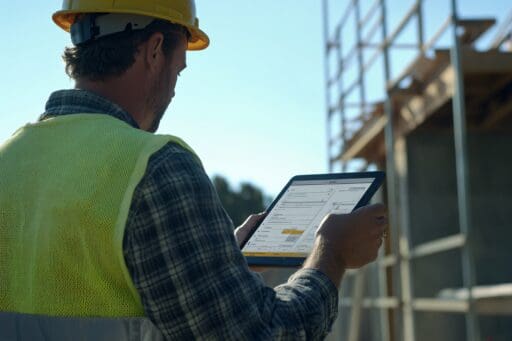
In today’s construction landscape, digital tools are reshaping how scaffolding companies operate—from the initial bid to project closeout. As the… Read More

What separates thriving scaffolding companies from the rest? In a competitive and increasingly digitized construction environment, success is defined by… Read More